

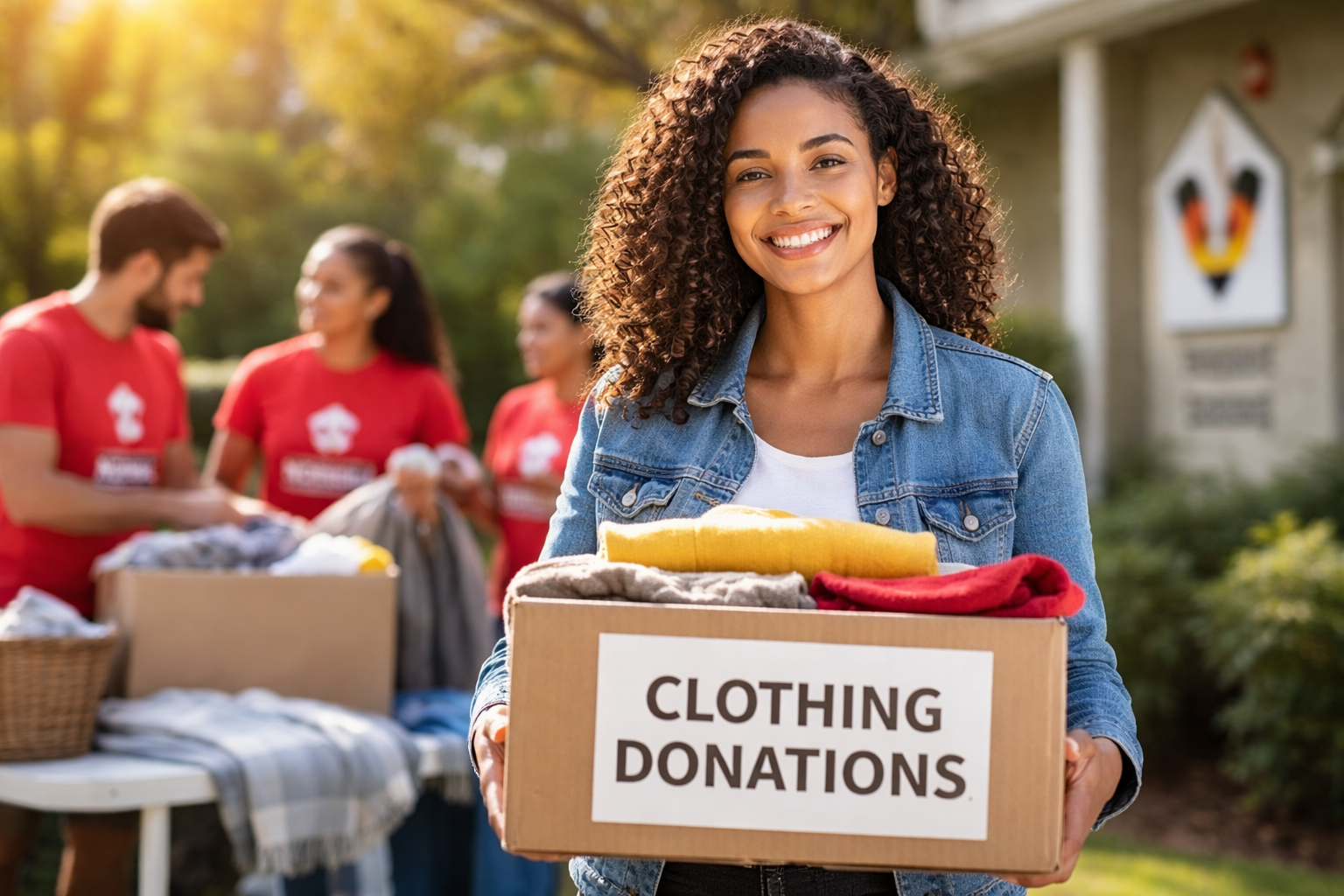
17 Dec The Power of Giving: How Donating Clothes Can Make a Difference
Most of us have clothes that we once loved but no longer reach for today.
Some pieces of clothes often remain unnoticed and forgotten in the wardrobe for years. With this, what often goes unnoticed is that these unused items still hold value. What if they find a new life in the hands of others? Wouldn’t it benefit everyone: the donor, receiver, and the environment?
Moreover, anything you donate turns personal excess into shared resources. This allows the piece to continue serving purpose beyond needs. Imagine giving a jacket to someone who could benefit from it to deal with a difficult season. The truth is moments like this may feel small to some, but they ripple outwards in a way we rarely see.
Few simple acts ofcharitable donations sit at the intersection of compassion as well as responsibility. It also asks us to look at what we have, reflect on what we truly need, and consider how our excess can become someone else’s essential. This shift in perspective is where real impact begins.
Why the Clothes You No Longer Wear Still Matter
At some point, most wardrobes reach a limit. Not because everything has been worn out, but because life has moved ahead.
Work changes, body changes, climate shifts, and the clothes that once fit our days no longer fit our routines. What usually follows is delay. We keep items “just in case”, even when we know that case is unlikely to happen. This pause is where meaning begins to form. It’s not good for anyone to keep functional clothes locked up, but giving them away without thinking often leads to waste. This is where charitable donations sit in the space between two outcomes.
The value of donations lies in what it prevents as much as what it provides. It reduces unnecessary consumption, keeps functional items in circulation, as well as supports people who need access rather than abundance. More importantly, donating clothes allows everyday resources to be redistributed without complexity or dependency.
Giving as a Response to Excess (Not Guilt)
Excess builds gradually when circumstances improve and options expand. Extra items bought for convenience, replacements purchased too early, and things kept “just in case” everything feels normal. None of these feels irresponsible in the moment.
The tension appears later, when usefulness fades but ownership remains. At that point, guilt is an easy response. But the truth is it’s also an unproductive one. Guilt tends to focus attention inwards, which in turn gives way to a reaction rather than a decision. What actually matters is not how excess makes us feel, but what excess does when it is left unmanaged.
Viewing donation as a response to excess reframes the action entirely. It becomes a way to keep resources active rather than stalled. To put it simply, clothing that moves back into circulation continues to serve a purpose instead of adding to waste or unnecessary demand for new production.
More Than Decluttering: The Real Impact of Donating Clothes
Decluttering is often framed as a personal reset. You clear space, regain order, and feel ‘much better’. Charitable donations start exactly there. Its impact extends well beyond the home. When clothes are donated thoughtfully, they begin working again socially, economically, and environmentally.
Donated clothing supports everyday stability on a practical level. It helps people meet basic needs without diverting limited income from essentials like food, transport, or healthcare. This kind of support doesn’t attract attention, but it plays a role in keeping daily life functional as well as predictable.
There are also wider effects that are easy to overlook:
-Keeps usable clothes out of landfills, reducing waste and disposal strain
-Extends the value of resources like fabric, water, energy, and labour
-Provides support without creating long-term dependence
-Strengthens local communities by encouraging shared use instead of constant replacement
Seen this way, donating clothes is not about tidying up. It is a practical contribution to systems that depend on circulation, access, as well as responsible use. The impact isn’t dramatic, but it is real, repeatable, and far-reaching.
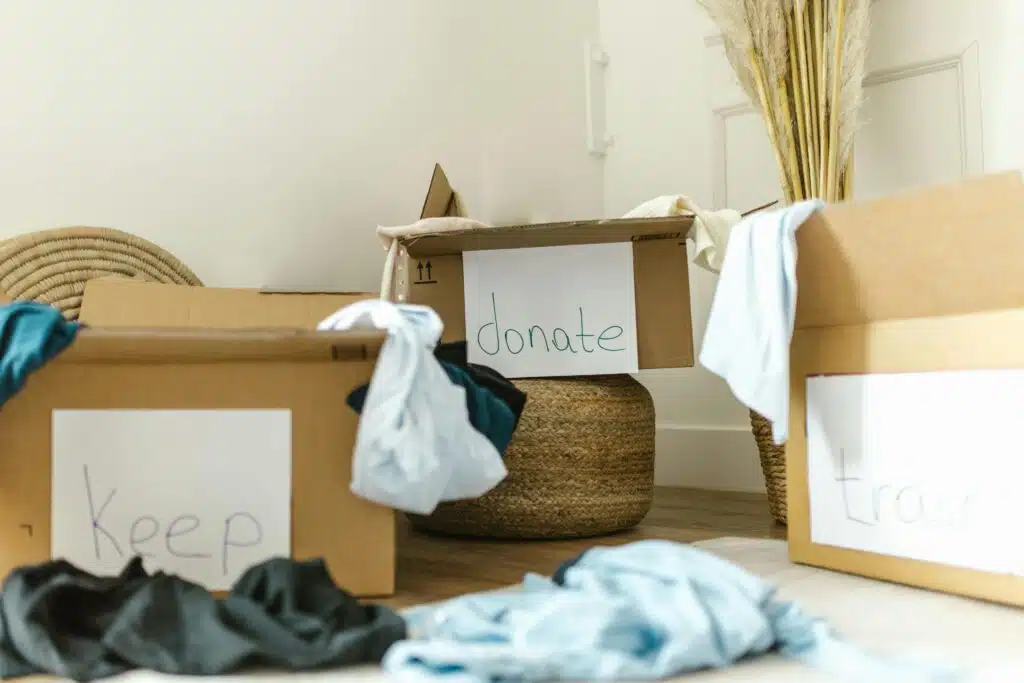
How Simple Giving Shapes a More Thoughtful Future
Small decisions often tend to shape the future more quietly than bold gestures. Charitable donations is one of them. It doesn’t announce change, yet over time it influences how resources move and how responsibilities are shared.
People reinforce a mindset that values continuity over disposal when they choose to give what they no longer need. Moreover, simple giving works because it is effortless. It fits into everyday life without requiring scale, recognition, or permission. The best part is it normalises the idea that ownership is temporary and usefulness is transferable. This shift affects how future choices are made: what we buy, how long we keep it, and how we think about its life beyond us.
The small acts of giving influence daily life in several meaningful ways:
-It helps people think beyond the moment and consider how their items can continue to be useful.
-It strengthens communities through small and consistent acts that don’t require much effort.
-It reduces the need to constantly replace things that still have life left in them.
-It encourages a sense of responsibility without pressure or guilt.
-It makes sharing feel normal rather than exceptional.
-It raises awareness around everyday consumption and its long-term effects.
Ultimately, when we consider why we should donate to charity, the communities become more responsive, consumption becomes more deliberate, and value is measured not by accumulation but by continued use.
Conclusion
Donating clothes may seem like a small decision. However, its impact reaches further than we often realise. In fact, they continue to serve people, reduce waste, as well as strengthen the system when items are passed on with intention.
Donation is about keeping resources in motion and responding thoughtfully to real needs. This belief sits at the heart of Ronald McDonald House Charities of Norfolk. By encouraging clothing donations and community participation, our organisation helps ensure that essential resources remain accessible and thoughtfully used. These collective efforts show how everyday giving can create meaningful support systems and make a measurable difference over time.
No Comments